Best AEO and GEO software compared (2026): one category, two names
AEO and GEO software are one category sold under two names. We compare what each vendor covers behind its label, from engines and crawler data to content tools.
HubSpot sells an "AEO tool". Writesonic sells "GEO". Siteimprove ships "Advanced AEO Insights", AthenaHQ calls itself a "GEO platform", Goodie markets a "full stack AEO platform", and Profound now calls its product an AI marketer. If you line their product pages up, they mostly run the same job underneath: they send prompts to AI engines, read the answers, and report whether your brand was named and which pages were cited.
So the label on the box tells you about the vendor's marketing team, not about coverage. This comparison ignores the label and looks at what each product measures, which engines it reads on its entry plan, whether it sees AI crawlers, and whether it helps you write the fix. We already cover the definitions in the difference between AI search optimization, GEO, AEO and LLMO, so this post spends one section on names and the rest on software.
Why one tool serves both names
The unit every one of these products works with is the same: a prompt, the answer an engine gave, the brands in that answer, and the URLs it cited. A Google AI Overview and a ChatGPT reply are both parsed into those four things. Whether a vendor calls the Overview an "answer engine" or a "generative engine" does not change the parsing.
The labels do hint at where a vendor started. Tools that say AEO often grew out of SEO and lean on Google's answers, structured content and FAQ-style pages. Tools that say GEO usually started with chat assistants and citation tracking. LLMO, large language model optimization, points at something more specific: what a model says from its training data, before it searches anything.
That last distinction is worth keeping, because it maps onto a real technical choice. A tool can collect answers from the live product a person uses, where the engine searches the web and cites pages. Or it can call a model's API, which mostly reflects what the model learned in training. Those are different measurements, and a good tool tells you which one you are looking at.
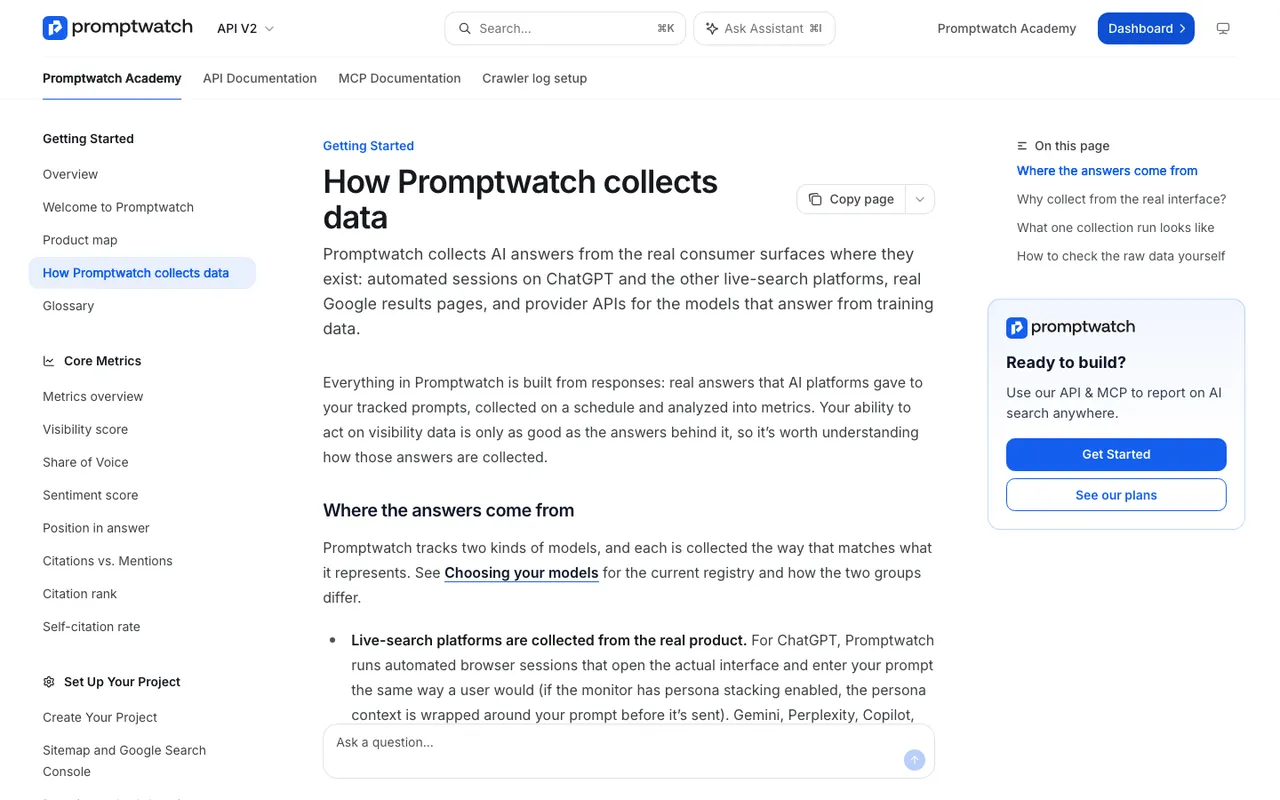 The Promptwatch Academy page "How Promptwatch collects data", captured November 14, 2026.
Promptwatch draws that line explicitly. ChatGPT, Google AI Overviews, Google AI Mode, Gemini, Perplexity, Copilot, Alexa and Meta AI are read through their real interfaces. Claude, DeepSeek, Mistral, Grok and several other models are tracked through their APIs, which shows what they answer from training data. In naming terms, the first group is your GEO and AEO picture and the second is closer to LLMO. Most vendors on this list do not say which method they use for each engine, so ask.
What sits behind each label
Every row below comes from our directory entry for that tool, except Promptwatch, which comes from its published plan matrix. "Not listed" means the entry does not document it, not that the vendor definitely lacks it.
| Software | Label it uses | Engines on the entry plan | AI crawler data | Content help | Entry price |
|---|---|---|---|---|---|
| Promptwatch | AI search visibility and GEO | Any supported engine | Crawler logs from Professional | AEO articles from Professional; Content Agent on Business | $95/mo |
| AthenaHQ | GEO platform | 11 models on Starter | Not listed | Content optimization agent | Free tier; $295/mo |
| Scrunch AI | AI visibility plus agent experience | 4 LLMs on Core | Bot traffic reporting | Site audits, recommendations | $250/mo |
| Profound | AI marketer | 3 on the trial; up to 9 on Enterprise | Agent Analytics named | Marketing agents | Trial; custom |
| Goodie AI | AEO platform | 5 models on Core | Listed, tier not stated | Writing and optimization agents | $295/mo |
| Siteimprove | AEO | Differs by page | Not described | Writing and Optimization Agent | Not published |
| Writesonic GEO | GEO | 3 on self-serve plans | Not listed | AI article writer | $79/mo (annual) |
| HubSpot AEO | AEO | 3 (ChatGPT, Perplexity, Gemini) | Not listed | Recommendations; blog drafts on Marketing Hub Pro | $50/mo |
Two rows need a caveat. Profound's description names Agent Analytics, while other parts of our entry say no crawler-log product is published, so check the depth of that feature in the demo. Siteimprove's own pages list different engines on different pages (the AEO page names ChatGPT, Perplexity and Google AI Overviews, other pages add Gemini, Copilot or Claude), so get the list in writing.
Reading the table by job
If you mostly care about Google answers
AEO-labeled tools are not automatically better here. HubSpot AEO, for example, tracks ChatGPT, Perplexity and Gemini and does not track Google AI Overviews or AI Mode. Writesonic's self-serve plans do include AI Overviews. Promptwatch reads AI Overviews and AI Mode in the real Google results page and adds Search Insights, which overlays Search Console and Bing Webmaster clicks and impressions on the same pages.
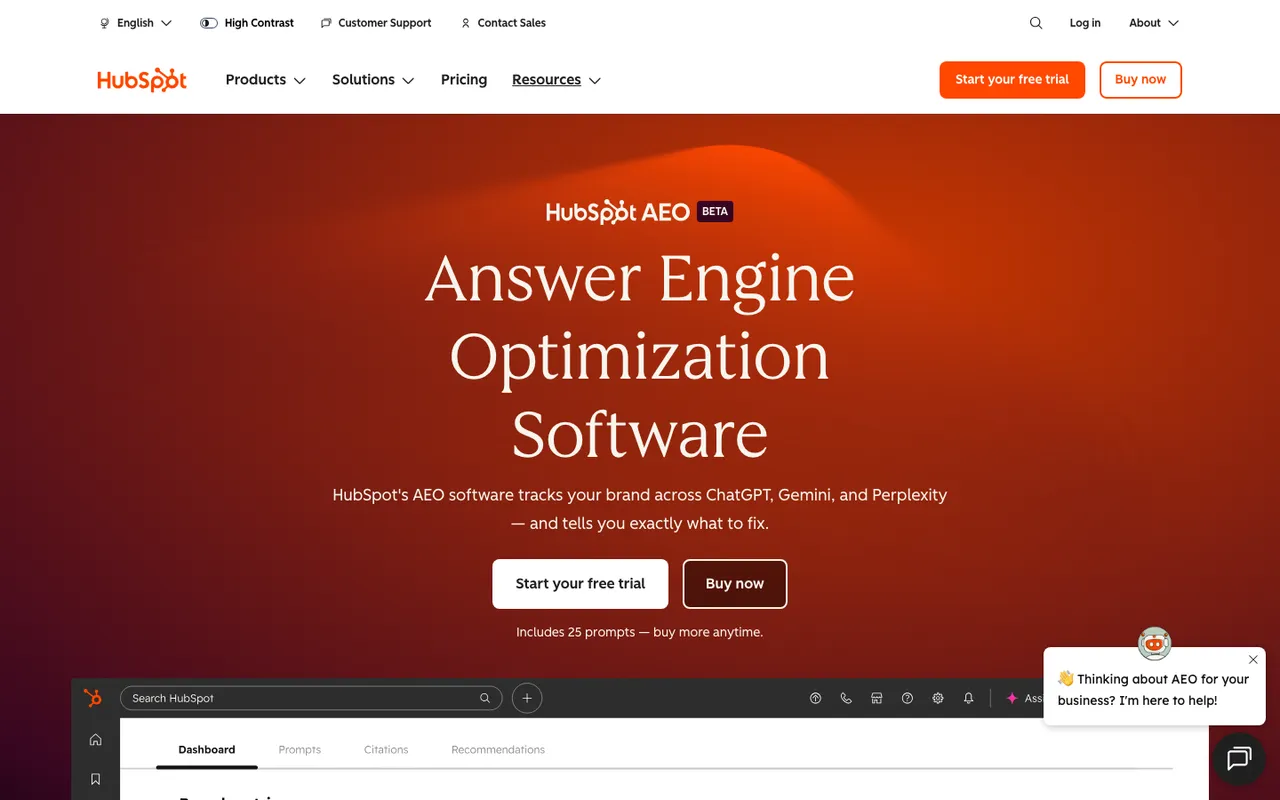 HubSpot's AEO product page, captured November 6, 2026.
If you mostly care about chat assistants
Look at engine count on the plan you will actually buy, not the top tier. Scrunch Core covers four LLMs. AthenaHQ Starter lists 11 models. Goodie Core covers five. Profound's trial covers ChatGPT, Gemini and AI Overviews, with the rest on Enterprise.
If you care about what models believe about you
This is the LLMO question, and it is where training-data answers matter. Ask each vendor whether Claude or Grok answers are collected through a live interface or an API. Promptwatch tracks them through the API and says so. Its Brand Narrative feature, on every brand plan, pulls the individual claims AI makes about you out of tracked answers and groups them into themes such as pricing, features, support and reputation, which is the practical way to see what a model "thinks".
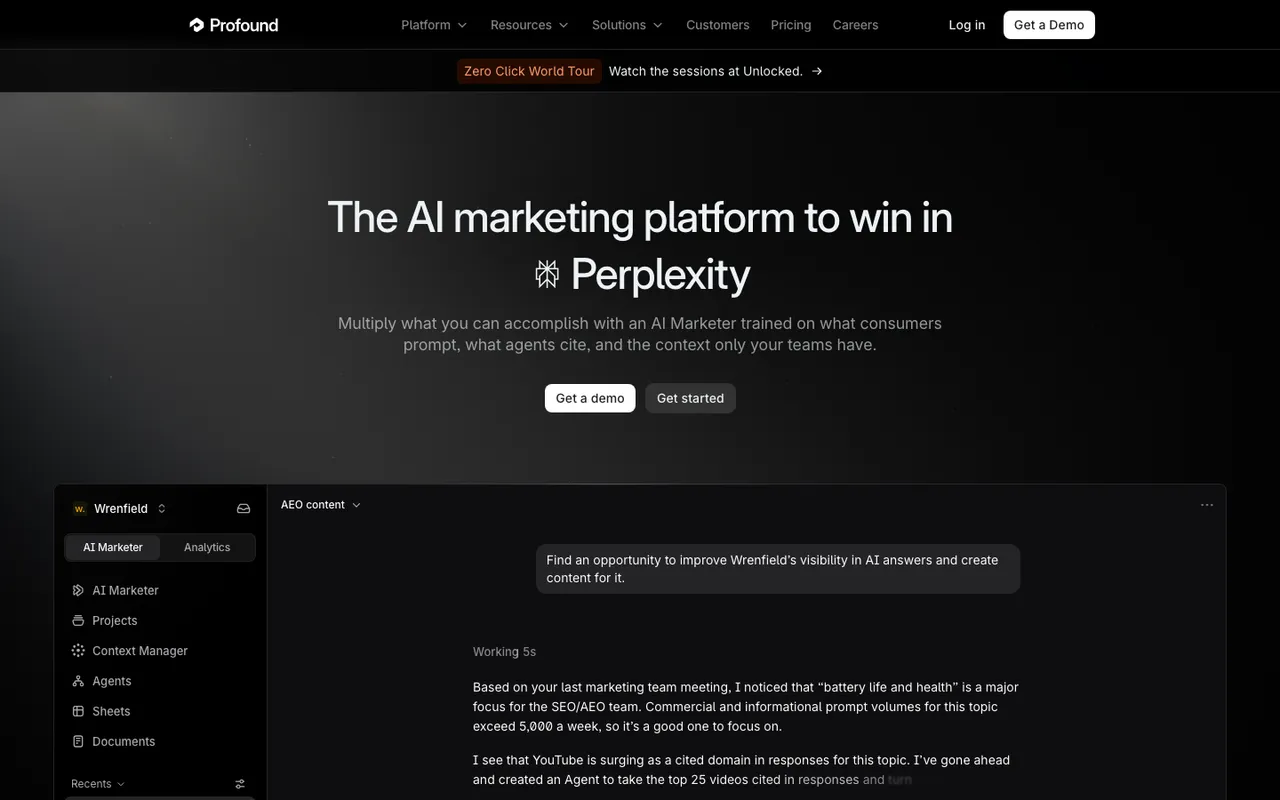 Profound's homepage, captured November 6, 2026.
Where the names genuinely diverge in practice
Labels aside, the products split on three questions that affect your results far more than the acronym:
Does the tool see your server? A tracker sees answers. Only a tool with crawler logs sees whether GPTBot, OAI-SearchBot, ClaudeBot or PerplexityBot fetched your pages. In our table, Promptwatch is the one with a documented, IP-verified crawler-log product on a self-serve plan. Scrunch lists bot traffic reporting, and the others either list it without detail or not at all.
Does the tool help you write? AEO and GEO vendors both increasingly bolt on writers. The difference is whether the writer knows what the engines cited. Promptwatch's content tools start from a tracked prompt, a query fan-out or a cited page, and the Content Agent on Business works from content gap analysis.
Does the tool measure the outcome? Visitor analytics that attribute AI-referred visits and conversions are rare in this table. Promptwatch includes them on every brand plan, from 200,000 visitor events on Essential.
A glossary is cheaper than a second tool
Teams often buy two products because one says AEO and the other says GEO. That is usually a waste. Agree internally on what you call the work, then buy for coverage. Promptwatch's free glossary is a reasonable shared reference for the vocabulary, including the terms vendors use to describe their own metrics.
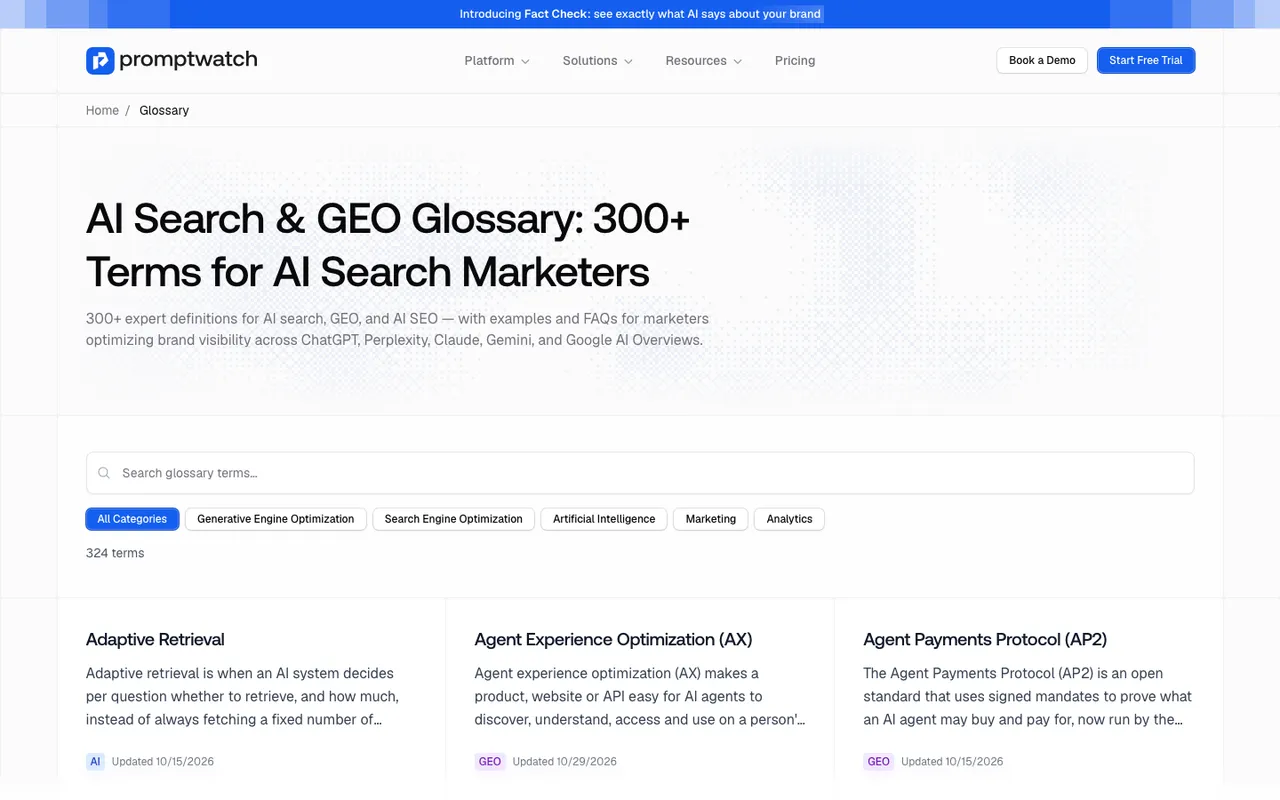 Promptwatch's glossary page, captured November 14, 2026.
Who should pick which
- You want GEO, AEO and LLMO measured in one place, with crawler logs and traffic: Promptwatch.
- You want a daily task queue and accept credits: AthenaHQ.
- You want to serve AI crawlers a separate page version: Scrunch AI.
- You live in HubSpot and need a cheap three-engine start: HubSpot AEO.
- You need article volume first: Writesonic GEO.
- You are an enterprise buying a broad marketing agent program: Profound.
For a ranked list across every category, see top AEO tools.
The bottom line
Call the work AEO, GEO or LLMO, whichever your team prefers. Then judge the software on coverage: which engines it reads and how, whether it sees AI crawlers, whether its content tools start from citation data, and whether it can show traffic afterwards. Promptwatch is the one in this comparison that answers yes to all four on a self-serve plan, and it separates live-search answers from training-data answers so the GEO and LLMO pictures do not blur together.
The quickest way to see your own starting point is Promptwatch's free AI Visibility Report, which scans ChatGPT, Gemini and Perplexity with no login and checks whether AI crawlers can reach your site.