Best AI content writer for SEO and GEO: buying a blog writer that gets cited in ChatGPT and AI Overviews
A buyer's guide to AI blog writers for ChatGPT and AI Overviews citations: what to evaluate, what each option costs from sourced pricing, and how to choose.
Buying an AI blog writer used to mean comparing editors and word limits. If the goal is now to be cited by ChatGPT and Google AI Overviews, the shopping list changes. You are paying for a feedback loop, and the draft is the cheapest part of it.
This guide walks through what to check before you sign, what the main options cost based on prices read from vendor pages in October 2026, and a short decision path at the end.
Start with what the engines say
Before comparing vendors, it helps to know which promises are impossible. Google's documentation page "AI features and your website" is blunt: the best practices for SEO remain relevant, and there are no additional requirements to appear in AI Overviews or AI Mode. Google adds that no special schema.org structured data is needed, though any structured data you use should match the visible text. Both AI Overviews and AI Mode may run a "query fan-out", meaning several related searches across subtopics, so one article can be pulled in for questions it never names.
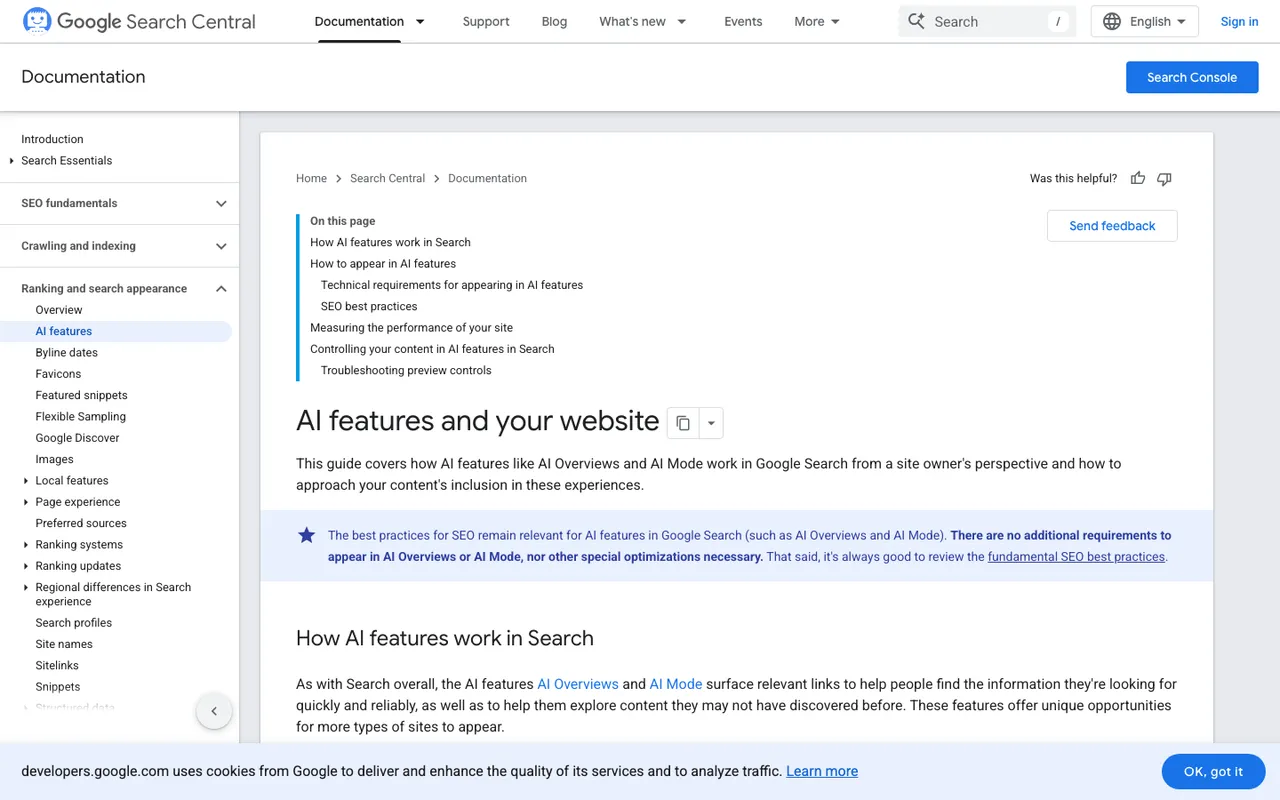
Google Search Central, "AI features and your website", captured November 21, 2026.
On the OpenAI side, the help article on ChatGPT search says results are ranked on multiple factors and placement is not guaranteed. To be eligible, a site should allow OAI-SearchBot and make sure its host or CDN accepts OpenAI's published search bot IP addresses.
So any vendor claiming its writer "guarantees AI citations" is selling something the engines themselves don't offer. Cross those off first.
Five things to evaluate
Where topics come from
A writer fed by your own keyword list writes for Google's old blue links. A writer fed by prompts you are losing, by the pages engines cite for those prompts, and by competitor coverage writes for AI answers. Ask the vendor to show the input screen.
Whether it fits what gets cited
Promptwatch's data report "Which Content Types Does ChatGPT Cite the Most?" (Sep 28 to Oct 4, 2026) found product pages at 22.4% of classified ChatGPT citations, landing pages at 16.8%, and listicles at 13.6%. For commercial prompts, comparisons rose to 7.9%. A writer that only produces generic how-to posts misses most of that mix.
Publishing and review
Check which CMSs it publishes to, whether it can schedule, and whether a human approves drafts before they go live.
Measurement after publishing
This is where most tools stop. You want to see, per page, whether AI crawlers fetched it, whether any engine cites it, and whether AI-referred visitors arrive and convert.
Cost model
Per-seat, per-article, per-credit, and per-prompt pricing all exist in this category. Model a realistic month before comparing headline prices.
What each option costs
Prices below are monthly unless noted and come from each tool's catalog entry, read in October 2026.
- Promptwatch: Essential $95 (no AEO articles), Professional $245 with 5 AEO articles, Business $579 with 10 AEO articles and the automated Content Agent. 7-day free trial on monthly billing. Unlimited seats on every paid plan.
- Frase: Starter $39 billed yearly or $49 monthly (10 articles, 20 AI Visibility prompts); Professional $103 yearly or $129 monthly.
- Surfer: Discovery $49; Standard $99 billed yearly; AI Search Analytics plan $82 billed yearly for 50 daily prompts.
- Writesonic GEO: Starter $79 billed annually (50 prompts, 15 articles); Growth $399.
- Clearscope: Essentials $129; Business $399. Unlimited users.
- Jasper: Pro $69 per seat monthly, $59 yearly; Business is custom with a 12-month commitment.
- AthenaHQ: free Essential tier; Starter $295 with 3,600 credits.
- Goodie AI: Core $295; Pro $999.
Surfer homepage, captured November 6, 2026.
Two things jump out. First, the cheap writers (Frase, Surfer, Writesonic) give you drafts plus a small prompt allowance, but none of them lists AI crawler logs or AI-referred conversions in our catalog. Second, Promptwatch is the only option on this list where the article, the crawl, the citation, and the visit sit in one workspace.
Questions worth asking every vendor
Sales pages blur together, so we bring the same short list to every trial or call:
- Show me the screen where a topic is chosen. Is it a keyword, or a prompt with the engines' answers next to it?
- Which engines does the tracking cover on the plan I'm buying, not on Enterprise?
- After I publish, where do I see that the page was fetched by an AI crawler?
- Can I see AI-referred visits for one URL, and do conversions show up?
- What happens to unused articles or credits at the end of the month?
A vendor that answers the third and fourth questions with "connect your analytics" is telling you the loop ends at publishing. That's fine for a drafting tool. It is a gap if you bought it to get cited.
How to choose
If you have one writer and a WordPress blog, and all you need is better briefs, Frase's Starter plan is the honest budget pick. Content teams that live inside an optimization score will be comfortable with Surfer or Clearscope.
If someone above you will ask "did that article get us into ChatGPT answers?", buy for the measurement first and the writer second. That points to Promptwatch. On Professional, the writer works from tracked prompts, query fanouts, or a page engines already cite, and Page Tracker can follow the published URL through citations and crawler visits. Business adds the scheduled Content Agent with a review inbox.
The fastest way to test that claim against your own site is a demo: book one at Promptwatch and ask them to show a single published page moving from draft to live URL to first citation.