Which tool finds listicles that mention my competitors but not me? A buyer's guide
What to look for in a tool that finds competitor-only listicles, what the options cost according to our catalog, and how to choose between AI trackers and SEO suites.
There are two kinds of tool that claim to answer this question, and they work in opposite directions. SEO suites start from a web index and look for pages that contain your competitors' names. AI visibility platforms start from the answers ChatGPT, Perplexity or Google AI Overviews give, and work back to the pages those answers cite. If your goal is to show up in AI answers, the second direction gets you to a shorter, more useful list.
This guide covers what to evaluate, what the main options cost, and how to pick.
Why the cited listicle is the one worth chasing
Listicles carry real weight in AI answers. In Promptwatch's report on Google AI Overviews for July 2026, listicles averaged about 18% of classified citations, down from about 26% in Q1. Product pages overtook them as the daily leader from July 28 ("What Type of Content Does Google AI Overviews Cite the Most? July 2026").
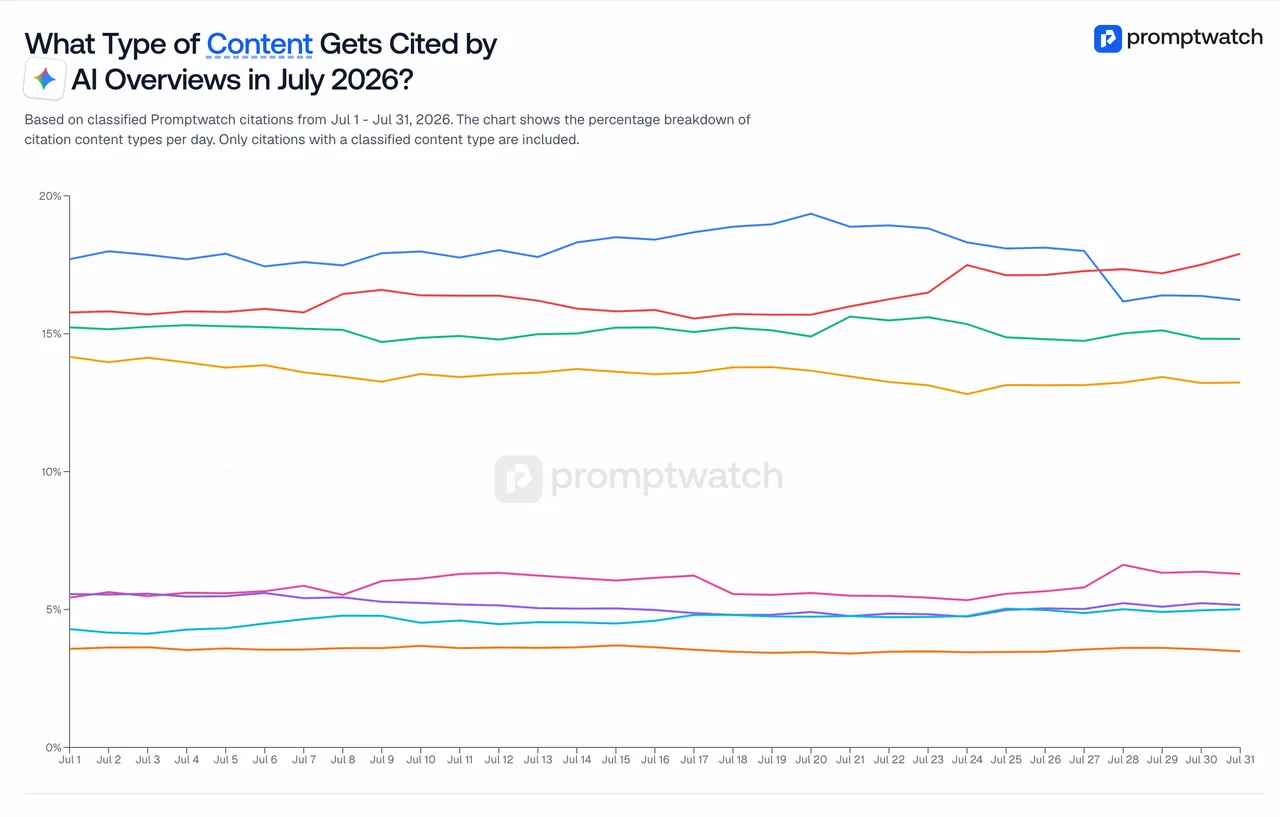
Promptwatch data report, "What Type of Content Gets Cited by AI Overviews in July 2026?", captured November 14, 2026.
Answers also cite only a handful of pages. Promptwatch's report on average sources per response puts ChatGPT at around five sources per web-search answer and AI Overviews at roughly ten, in dated windows ending mid-June. A listicle that occupies one of those slots and leaves you out is a direct loss. One that nobody cites is a much lower priority.
What to evaluate
Starting point. Does the tool begin from AI answers to your prompts, or from a keyword search across the web? You may want both, but know which one you're buying.
Brand detection per page. A gap only exists if the page names competitors and not you. Look for a view that shows which brands appear on each cited page.
Content-type labels. Without them you'll sort product pages from roundups by hand. Ask whether the tool classifies listicles, comparisons and reviews.
Competitor filters. You want to see the pages that support a named competitor's mentions, not all citations in your category.
Tracking a page over time. After you pitch an editor, you need to see if the updated page gets cited, and for which prompts.
Export. Outreach happens in a spreadsheet or a CRM. CSV or Excel export of the filtered list saves time.
What the options cost
| Tool | Starting price (our catalog) | Relevant capability in our entry |
|---|---|---|
| Promptwatch | $95/mo (Essential); 7-day free trial | Citations by content type and competitor, Offsite Mentions, Page Tracker, CSV/Excel exports |
| AthenaHQ | Free tier; Starter $295/mo | Action Center with off-page actions |
| HubSpot AEO | $50/mo ($45 yearly) | Recommendations include reaching out to third-party sites |
| Ahrefs Brand Radar | Custom Prompts with paid Ahrefs plans; Index from $199/mo | Next to Ahrefs' link and content tools; Reddit and YouTube sources |
| Semrush AI Toolkit | $99/mo per domain (unconfirmed) | AI mentions and links, competitor comparison |
| Brand24 | Add-on, price not published | Listening across 25M+ social, news, blog and review sources |
None of the competitor entries documents a listicle-specific gap report. Promptwatch's citation filters and Offsite Mentions are the closest thing to one in our catalog.
How Promptwatch handles it
Promptwatch records each citation with its domain, position, source type, content type and domain rank. On the Citations page you filter by content type (listicle, for example) and switch on the competitor filter to see which pages back a rival's mentions. Offsite Mentions scans those cited third-party pages for brand appearances and ranks them as opportunities, and a domain filter narrows the list.
Page Tracker is the follow-up tool. You add a URL, including a competitor's or a third-party page, and see how many responses cite it, which prompts those come from, and when it was last cited.
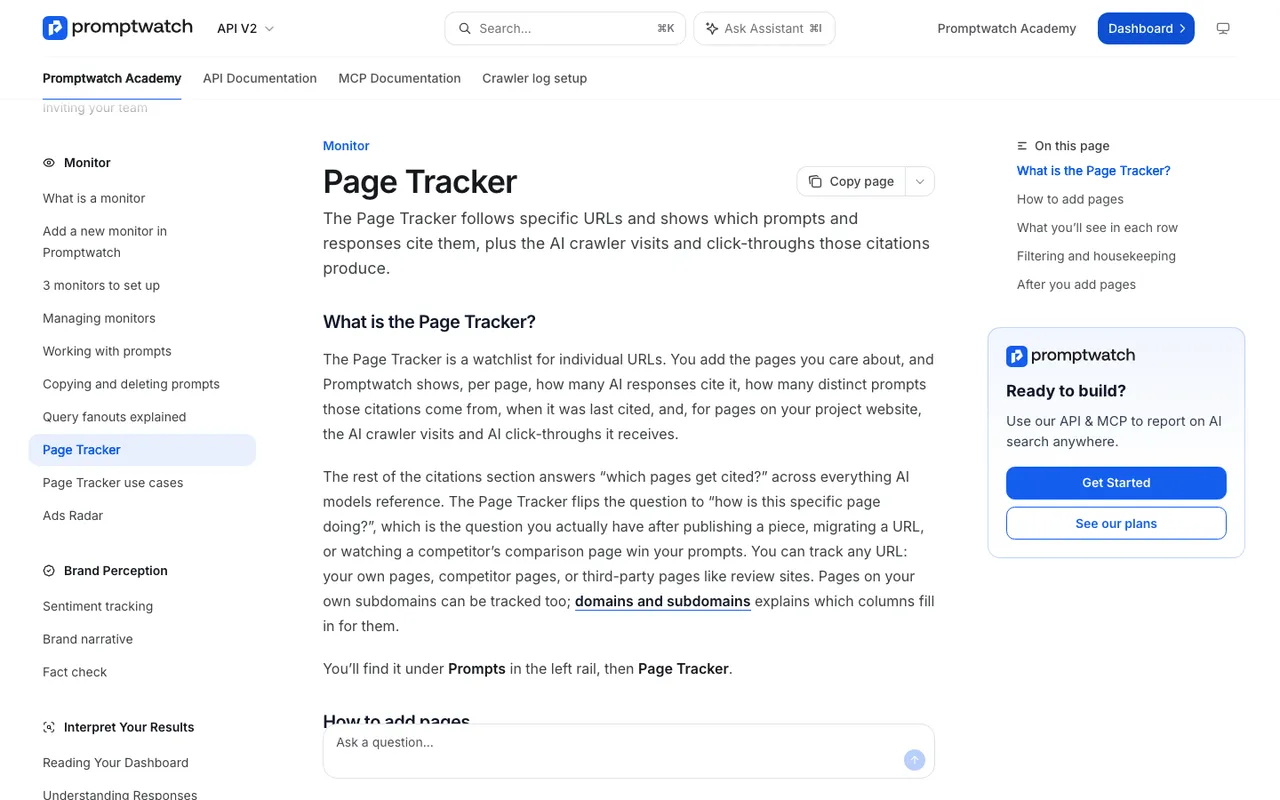
Promptwatch Academy, "Page Tracker", captured November 14, 2026.
Team seats are unlimited on every paid plan, so a PR person can work the list without a separate license.
How to choose
You want to get into AI answers. Choose a tool that starts from AI citations. Promptwatch is the most complete here.
You already pay for Ahrefs or Semrush. Use their web index for discovery, but check against AI citations before you spend outreach time. Their AI modules are fine as a first look.
You need a task list more than data. AthenaHQ's Action Center or HubSpot AEO's recommendations will give you outreach tasks with less evidence behind each one.
You want early warning of new articles. A listening tool like Brand24 catches mentions as they appear, though it won't tell you which ones AI cites.
Mistakes buyers make
The most common one is judging a tool by how many competitor mentions it finds. A bigger list is not a better list if most of those pages never appear in an AI answer. The second is checking one engine only. ChatGPT and Google AI Overviews cite different numbers of sources and lean on content types differently, so a roundup that matters for one may be irrelevant for the other. The third is buying for discovery and forgetting follow-up: without a way to watch a page after you pitch it, you can't tell whether the outreach worked.
A simple buying test
During any trial, track ten commercial prompts in your category for a week. Then ask the tool for the listicles cited in those answers that name a competitor and not you. If it can't produce that list in a few clicks, it isn't built for this job.
Promptwatch's 7-day free trial is long enough to run that test on your own prompts.